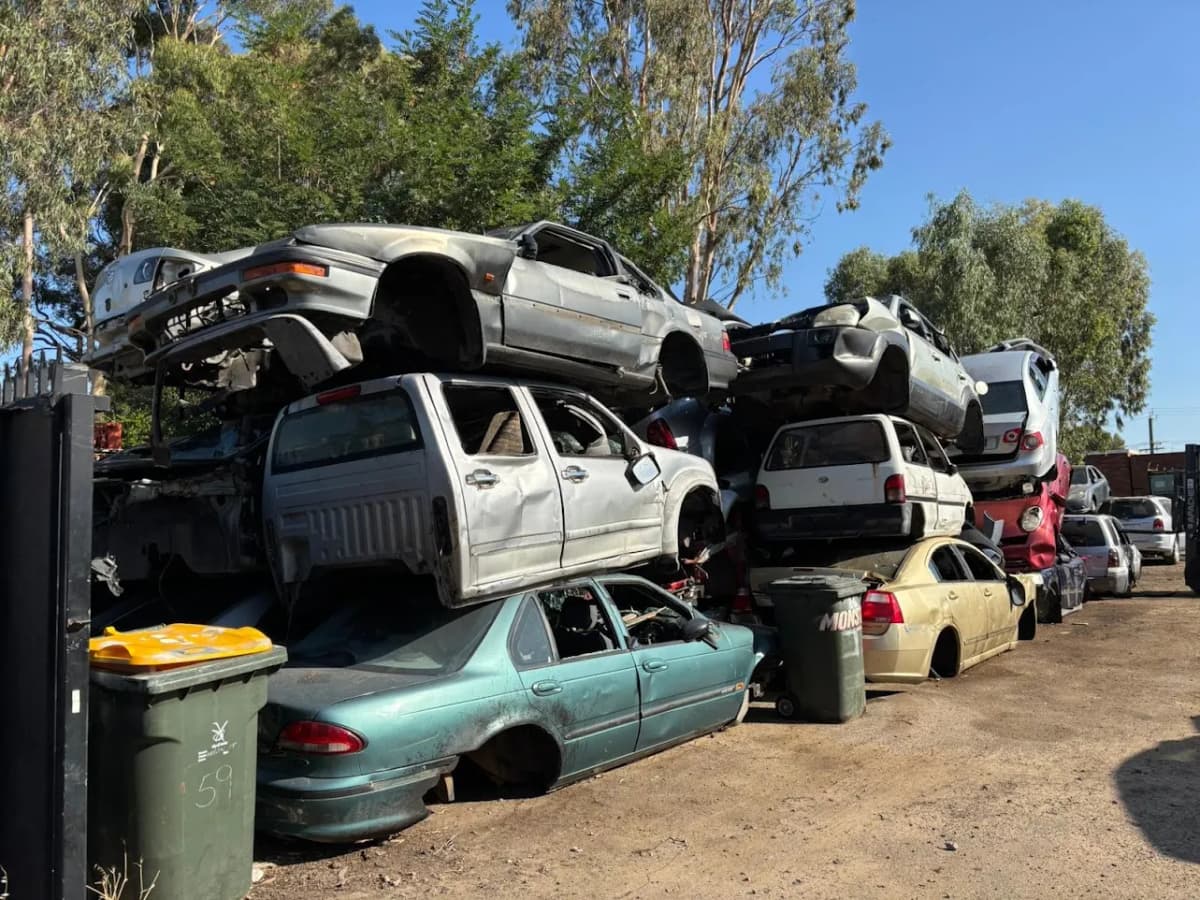
When most people picture a car wrecker, they see a stack of crushed shells and a fork loader shifting metal around a yard. That image isn't wrong — but it leaves out the part that actually matters. Behind every vehicle we collect at our Bellevue facility is a structured depollution and recycling process designed to stop hazardous materials reaching the soil and groundwater of the Swan Coastal Plain, and to recover the steel, aluminium, copper, and salvageable parts before the shell ever hits a crusher.
I'm Zia, and I manage the yard at Midland Wreckers. After more than two decades doing this work across Perth, I want to walk you through what actually happens to a car after we tow it off your driveway — because the environmental side of this industry is the part nobody explains, and it's the part that separates a licensed wrecker from a backyard operator.
A typical end-of-life vehicle contains 30+ litres of hazardous fluids (engine oil, coolant, brake fluid, transmission fluid, power steering fluid, fuel), a lead-acid battery, mercury switches, airbag propellants, and over a tonne of recoverable steel. Dumped or improperly processed, every one of those ends up in soil or stormwater. Processed properly, up to 95% of the vehicle by weight is recycled or repurposed.
Watch the Video Version
Prefer to watch instead of read? Here's the video version of this guide — the same depollution process, fluid recovery, battery recycling, and steel recovery story, narrated and shown in action at our Bellevue yard.
Video version of this article — the full environmental breakdown, narrated. Subscribe on YouTube for more Perth car-wrecking guides.
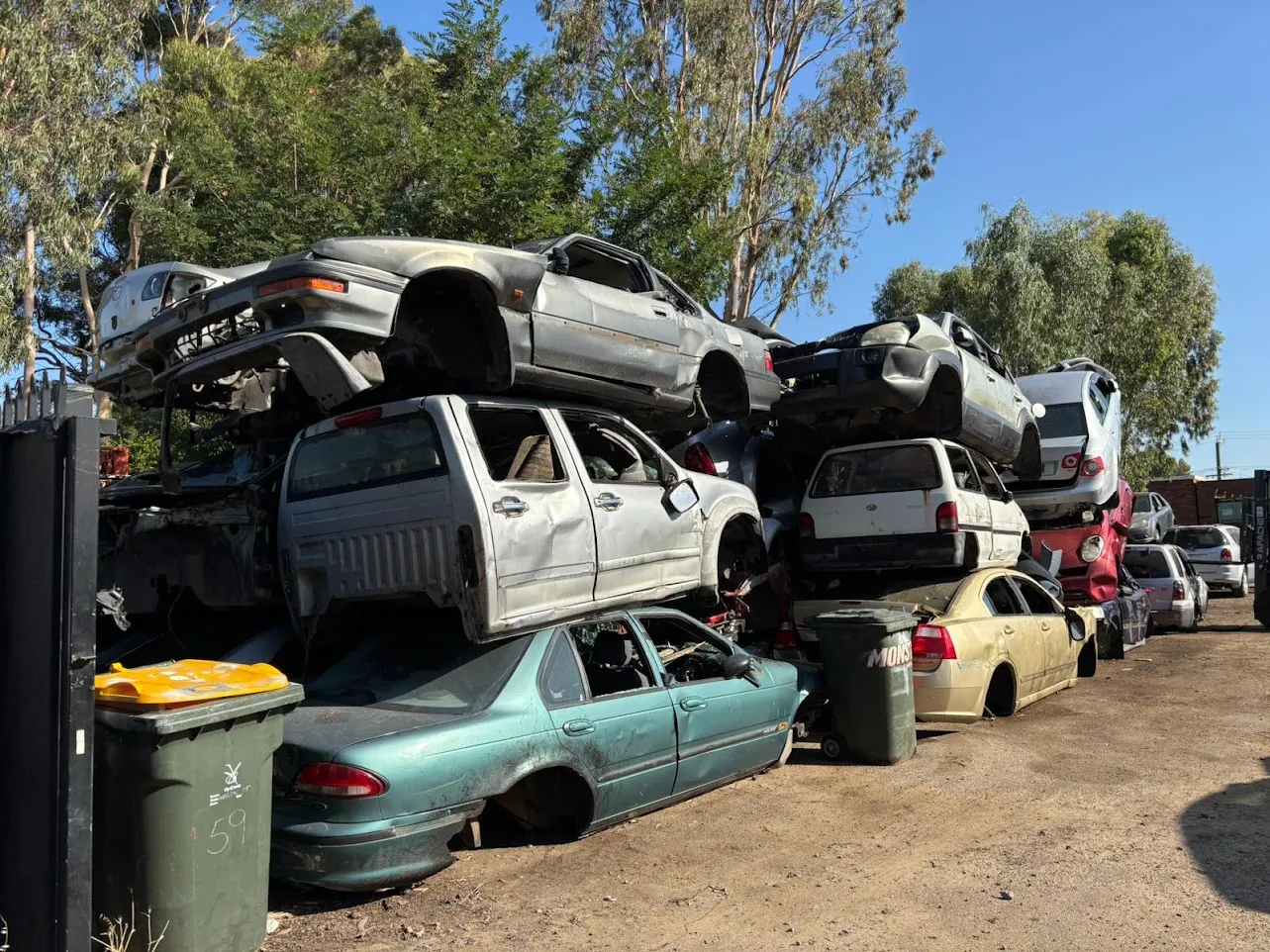
Vehicles staged for processing at our Bellevue yard. Each one is depolluted before any dismantling or crushing begins.
The Problem: What's Actually Inside an End-of-Life Vehicle
Average passenger car in Australia weighs around 1.3 tonnes. Roughly 65% of that weight is steel, 10–12% is non-ferrous metals (aluminium, copper, zinc, lead), and the remainder is plastics, rubber, glass, fluids, and upholstery. The hazardous fraction is small by weight but enormous by environmental impact:
- Engine oil: 4–6 litres. One litre of oil can contaminate up to one million litres of water.
- Coolant (glycol): 5–8 litres. Toxic to aquatic life, sweet-tasting to animals.
- Brake and transmission fluid: 2–4 litres combined. Petroleum-based, slow to degrade.
- Power steering fluid: 1 litre. Petroleum-based.
- Residual fuel: 5–50 litres depending on tank level. The single largest fire and contamination risk.
- Lead-acid battery: ~14 kg of lead, sulphuric acid, plastic casing.
- Mercury switches & airbag propellants: small quantities, high toxicity.
- Tyres: 4–5 per vehicle. In WA, tyres cannot legally go to landfill.
When an end-of-life vehicle is dumped in a paddock, left in a driveway for years, or processed by an unlicensed operator who skips the depollution step, every one of those finds its way into the environment. Oil stains the concrete, rain washes it into stormwater drains, coolant leaches into sandy Perth soil, and the battery breaks down into lead and acid that persists for decades.
The Licensed Wrecker's Process: Depollution First, Always
At Midland Wreckers, no vehicle is crushed, shredded, or dismantled for parts until it has been through a full depollution cycle. This isn't optional — it's a legal requirement under Western Australia's Environmental Protection Act 1986 and the national Product Stewardship Act 2011, which governs how end-of-life vehicles must be processed. Here's what that actually looks like on the ground:
Step 1 — Fluid Recovery
Every vehicle that arrives at our Bellevue yard is positioned over a dedicated bunded drainage bay. A technician drains the engine oil, gearbox oil, coolant, brake fluid, power steering fluid, and any residual fuel into separate, clearly labelled containment systems. None of these fluids go into stormwater drains, sewerage, or soil. They're collected by a licensed waste oil recycler who re-refines them into base oils or burns them as approved industrial fuel.
This is the step that most distinguishes a licensed yard from a backyard one. An unlicensed operator will often drain oil onto the ground or into an unlined pit. We've seen the legacy of that on properties across Perth — contaminated soil that costs tens of thousands of dollars to remediate when the property is eventually sold.
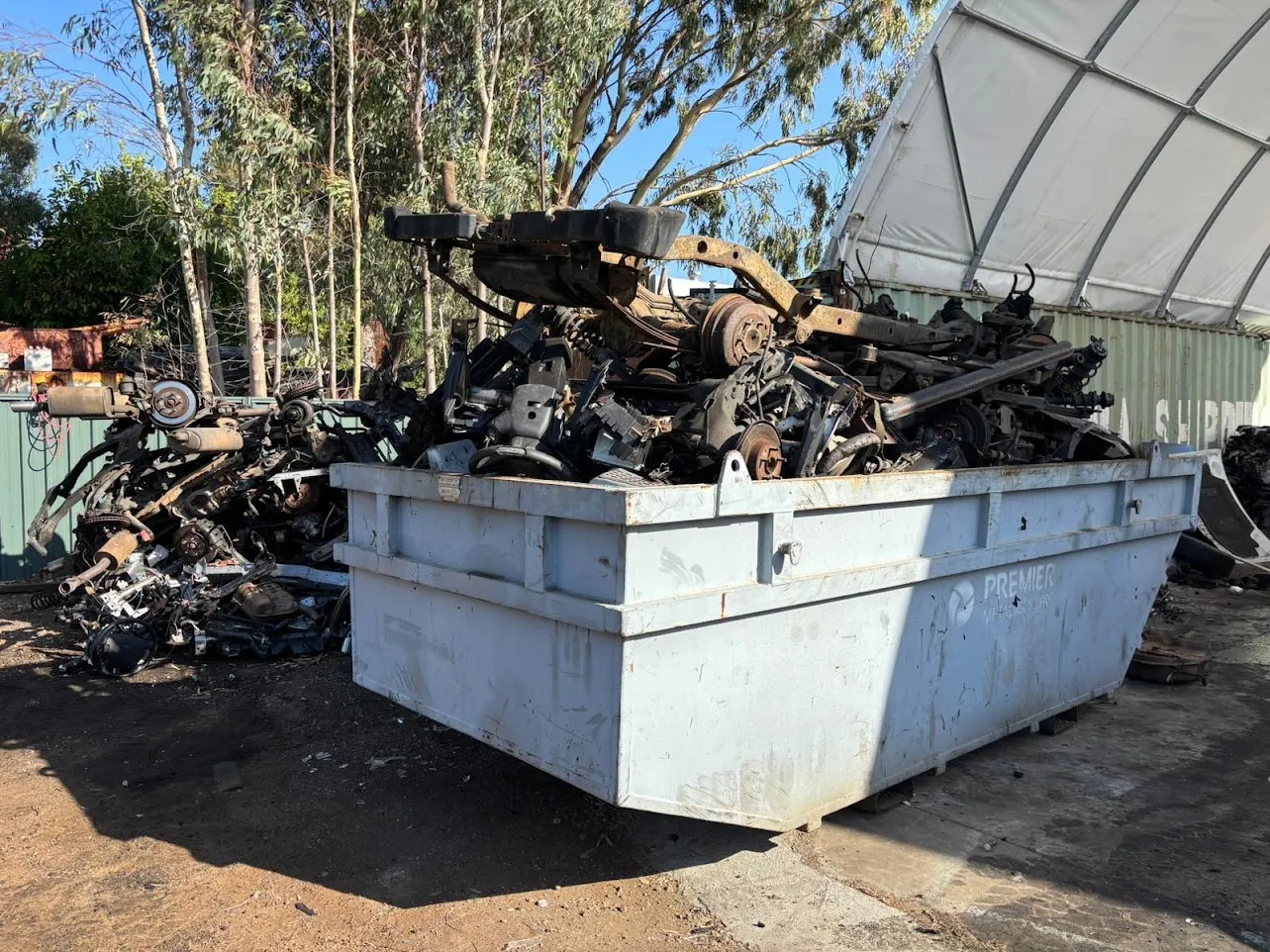
Licensed containment for fluids and separated metal streams at our yard. Nothing reaches the ground.
Step 2 — Battery Removal
The lead-acid battery is removed intact and stored in a dedicated battery containment area. Batteries are collected by a specialist lead-acid recycler — the lead is smelted and reused in new batteries, the plastic casing is chipped and reformed, and the sulphuric acid is neutralised or converted into sodium sulphate for use in glass and textile manufacturing. Over 98% of each lead-acid battery is recoverable, which is why they're one of the most successfully recycled consumer products in Australia.
Step 3 — Hazardous Component Removal
Airbags and seatbelt pretensioners contain explosive propellants and must be professionally deployed or removed before the shell is crushed. Mercury switches (still present in some pre-2003 vehicles) are removed intact and sent to a specialist mercury recovery facility. Catalytic converters are removed separately — they contain platinum, palladium, and rhodium, precious metals that are recovered and reused in new catalysts.
Step 4 — Tyre Separation
Tyres cannot legally go to landfill in Western Australia. We separate all four (or five, including the spare) and send them to a licensed tyre recycler. Usable tyres with sufficient tread may be retreaded; the rest are shredded into crumb rubber used for road surfaces, playground flooring, and equestrian arenas. Burning tyres — once common in unlicensed yards — releases a toxic cocktail of benzene, heavy metals, and particulate matter, and is strictly illegal.
Metal Recycling: Why It Matters More Than You Think
Once depollution is complete, the remaining shell is assessed for salvageable used car parts — engines, gearboxes, alternators, body panels, electronics, suspension components. Working parts are tested, catalogued, and sold through our parts division, extending the life of other vehicles on Perth's roads and reducing the demand for new part manufacturing.
What's left — the bare shell — is crushed and sent to a certified metal recycler. Steel is one of the most recyclable materials on earth, and it can be recycled indefinitely without losing strength. The environmental case for recycling steel rather than mining new iron ore is striking:
- Recycling one tonne of steel saves approximately 1,100 kg of iron ore, 630 kg of coal, and 55 kg of limestone.
- It uses roughly 74% less energy than producing steel from raw ore.
- It avoids the 1.8 tonnes of CO2 emitted per tonne of primary steel production.
- It keeps a tonne and a half of material out of landfill per vehicle.
Australia recycles approximately 4–5 million tonnes of scrap metal each year. Passenger vehicles are a meaningful chunk of that — and every vehicle we process at Midland Wreckers contributes to it.
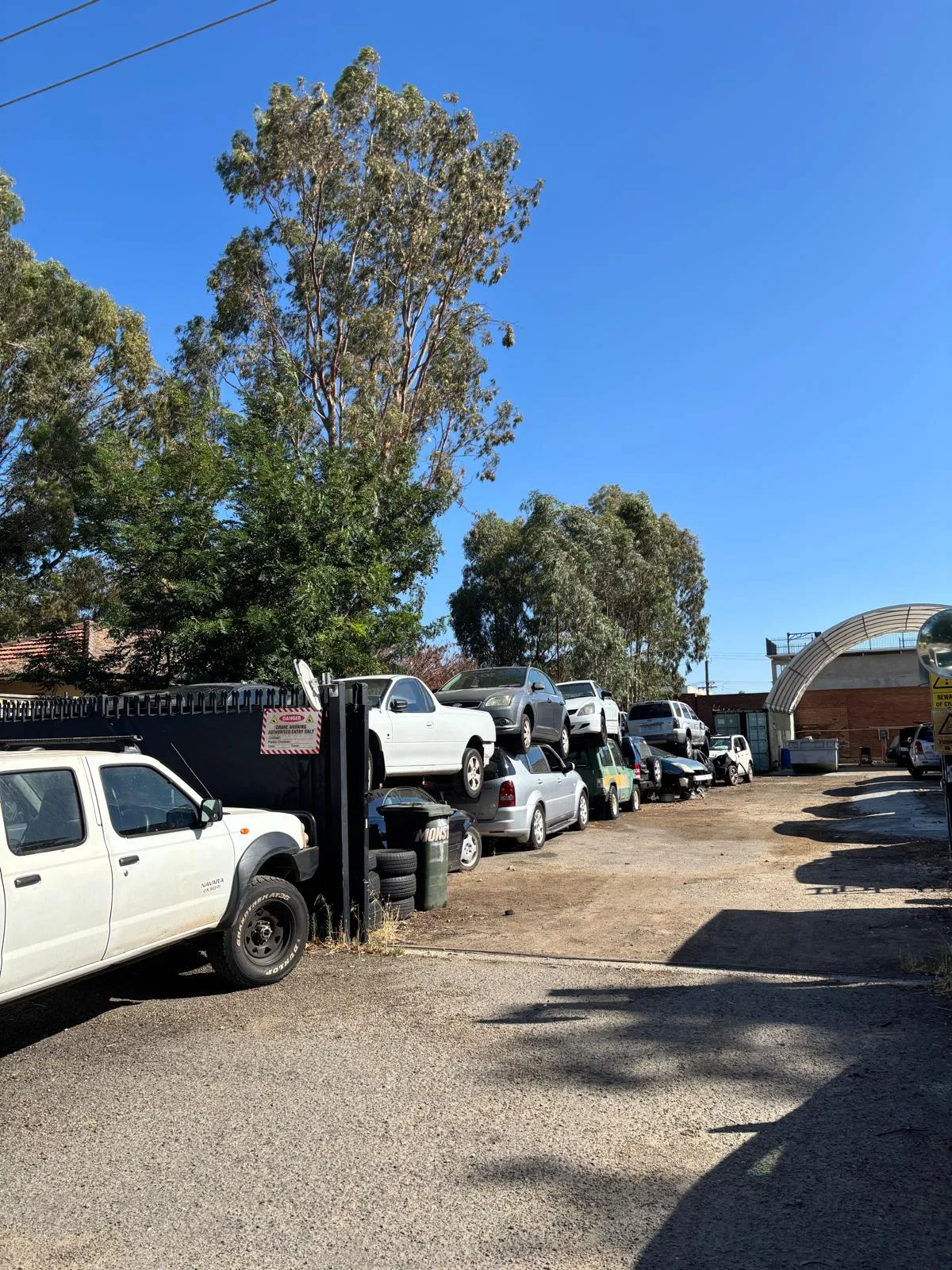
The Midland Wreckers yard at 59 Helen St, Bellevue — where every vehicle is processed to a 95% recovery rate.
The Perth Context: Why This Work Matters Here
Perth sits on the Swan Coastal Plain — a strip of sandy, highly permeable soil stretching from Gingin to Dunsborough. That permeability is a double-edged sword. It makes the region's groundwater (the Gnangara Mound and other aquifers that supply much of Perth's drinking water) highly vulnerable to contamination from surface pollutants. Engine oil or coolant spilled onto sandy soil doesn't pool on the surface — it moves straight down into the aquifer.
This is why the Department of Water and Environmental Regulation (DWER) licenses and monitors vehicle dismantling facilities, and why licensed yards like ours operate on hardstand surfaces with bunded drainage that captures and contains any spillage. When you sell your car to a licensed wrecker, you're choosing a disposal path that protects the aquifer under your city. When you sell to an unlicensed operator who's working from a paddock, you're choosing one that doesn't.
Ask three questions: (1) What's your Motor Vehicle Dealer licence number? Ours is MD32037. (2) Where is your yard? We're at 59 Helen St, Bellevue — a real, licensed facility, not a paddock. (3) Can I see your depollution bay? A licensed operator will show you. If any answer is vague, walk away.
Sustainable Parts: The Circular Economy in Practice
Beyond metal and fluid recycling, there's a quieter environmental win in the parts we salvage. When a 2015 Toyota Corolla comes to us with a failed gearbox but a perfectly good engine, alternator, starter motor, doors, and panels, those parts get a second life in other Corollas still on Perth's roads. That extends the lifespan of those vehicles — and every year of extended vehicle life is a year of deferred manufacturing emissions.
Manufacturing a new mid-size car produces roughly 7–10 tonnes of CO2 before it's ever driven. Keeping existing vehicles on the road through affordable quality used parts — and recycling the rest responsibly when they truly reach end-of-life — is one of the most practical contributions an individual can make to reducing automotive emissions. It's not glamorous, but it works.
What Happens When You Choose the Wrong Disposal Path
I've been called to properties across Perth to clean up the mess left by improper vehicle disposal. Abandoned shells leaking oil into sandy soil. Batteries cracked open and leaking acid. Tyres dumped in bushland attracting mosquitoes and arson. The cost of remediation — when it's even possible — falls on the property owner, not the operator who dumped the vehicle. And the environmental damage persists for decades.
The licensed wrecker route exists for exactly this reason. When you sell a car to Midland Wreckers, you're not just getting cash and free removal — you're choosing the disposal path that WA environmental law was written to encourage. Every vehicle we process is depolluted, dismantled, and recycled to a documented standard. That's the difference, and it's the part of this industry I'm proud to be part of.
If You've Got a Car to Dispose Of
If you're holding on to an old, damaged, or unwanted vehicle — whether it's a non-runner in the driveway or a wreck that's been sitting in the back paddock for years — we'll collect it free of charge anywhere in the Perth metro area, pay you cash on the spot, and process it to the environmental standard described above. Call us at (08) 6477 4199 or get an instant quote online. We also buy scrap cars, complete vehicles for wrecking, 4WDs, and trucks in any condition.
And if you've got questions about the recycling process — what happens to a specific fluid, where your battery ends up, whether a particular part can be salvaged — I'm happy to answer them. This is the work we do every day, and the more people understand it, the fewer cars end up where they shouldn't.
Written by
Zia Arife
Manager, Midland Wreckers
Zia Arife is the Manager of Midland Wreckers, running the yard at 59 Helen St, Bellevue. With over two decades in Perth's auto wrecking industry, he's personally overseen the recycling of thousands of end-of-life vehicles — from donor Hiluxes stripped by builders to family sedans that have simply reached the end of the road. Zia writes this blog to share what he's learned on the ground: honest pricing, fair processes, and the environmental standards that separate a licensed wrecker from a backyard operator. If you've got a question about your car's value or the disposal process, he's the one who'll answer it when you call (08) 6477 4199.
Have a car like this?
We offer top cash for cars in any condition. Get a free quote today!
Get Instant QuoteMore from the Yard
More real Perth car-wrecking stories and guides.
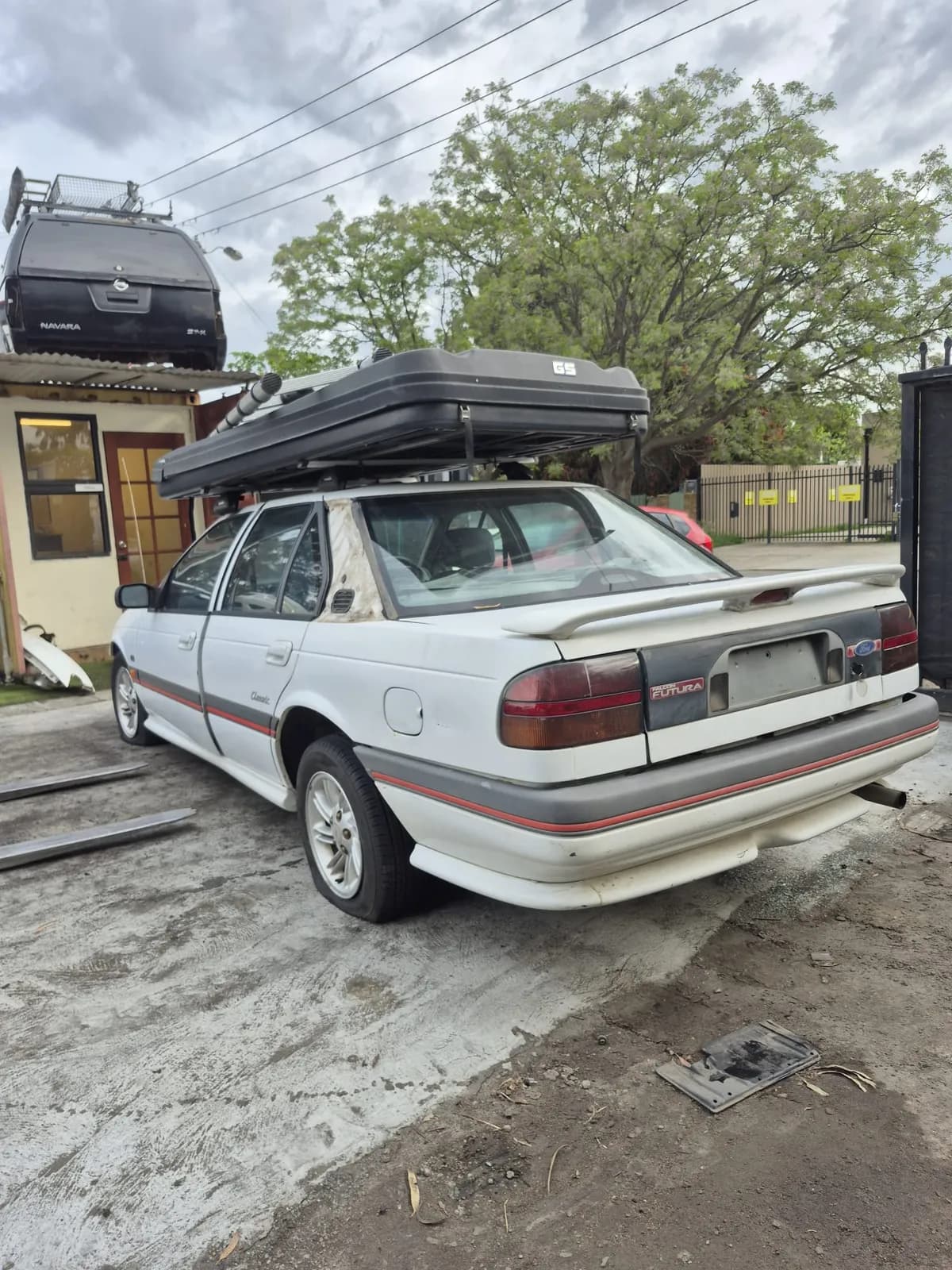
1994 Ford Falcon ED Futura Rolls Into Bellevue — Roof-Top Camping Pod Still On
A genuine ED-series Falcon Futura, complete with a roof-top camping pod, just rolled into our Bellevue yard. Now dismantling — panels, interior, and the robust 4.0L six-cylinder engine are in high demand. We pay cash for Ford Falcon vehicles in any condition.
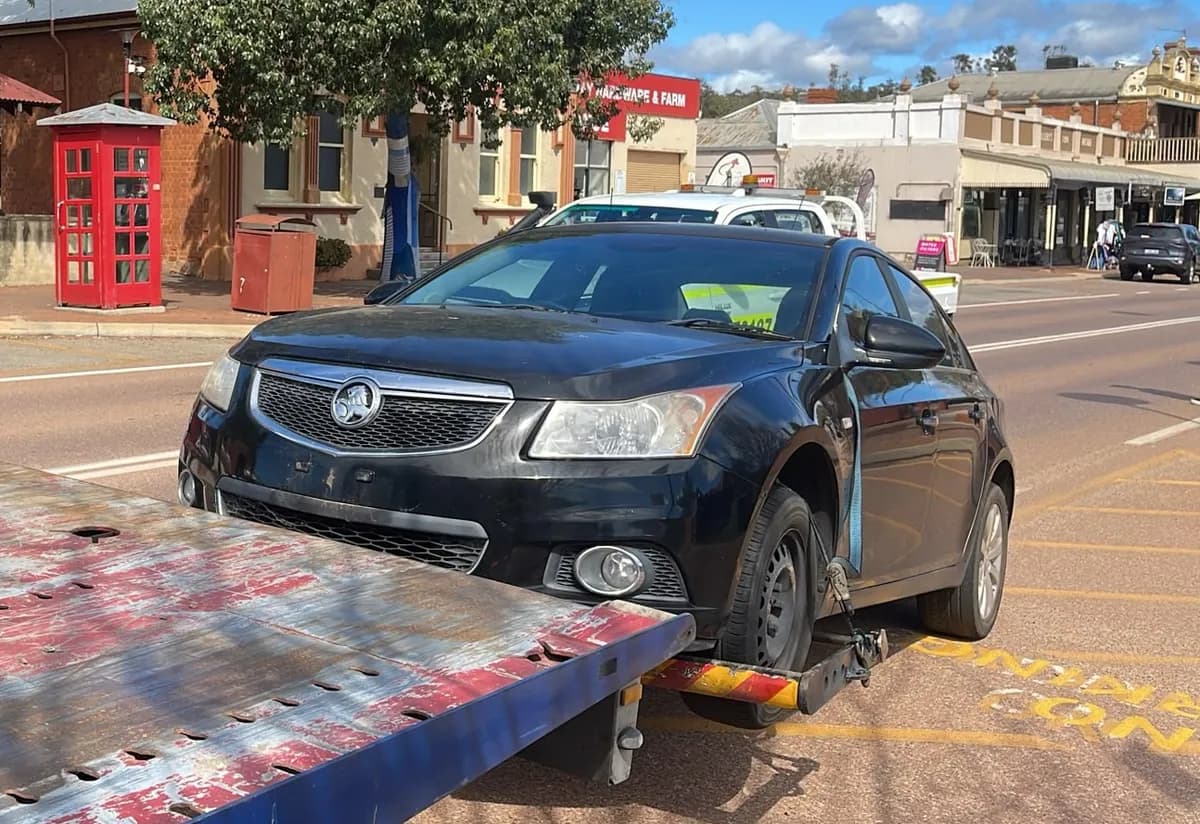
Car Removal Out To Toodyay — 85 km Through the Avon Valley For a 2013 Holden Cruze
A 2013 Holden Cruze, non-running, collected from Toodyay. A scenic 85 km drive through the Avon Valley to pay $500 cash and provide free towing, demonstrating our reach beyond the Perth metro. Parts demand remains strong for Holden vehicles.

Removing a Non-Running Ford Mondeo in Scarborough — Timing Belt Failure and a Jump Start
A 2010 Ford Mondeo in Scarborough with a failed timing belt and multiple issues — not starting, needed a jump start with a battery pack. We paid $500 cash and towed it free the same day. Here's how the pickup went.